Mathematics · September 12, 2026
Midas Prover solves PutnamBench
672 / 672
✓ 672 / 672 (100%) PutnamBench Lean 4 problems proved and machine-checked.
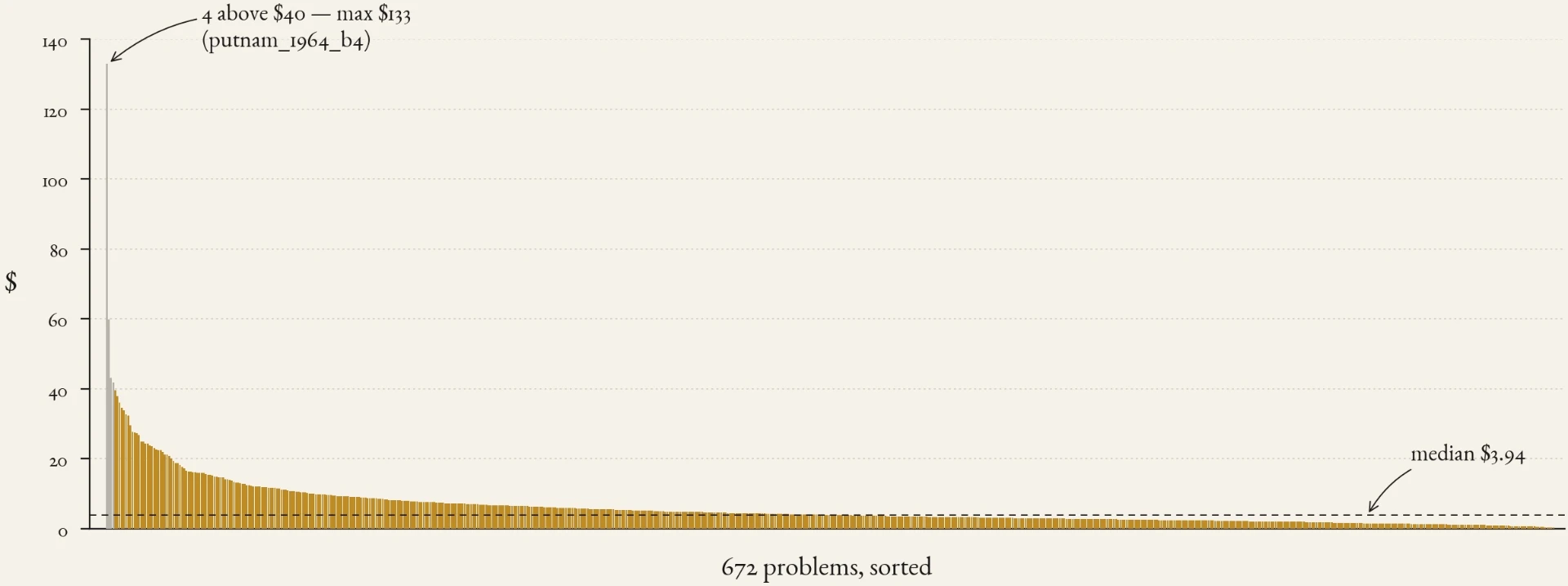
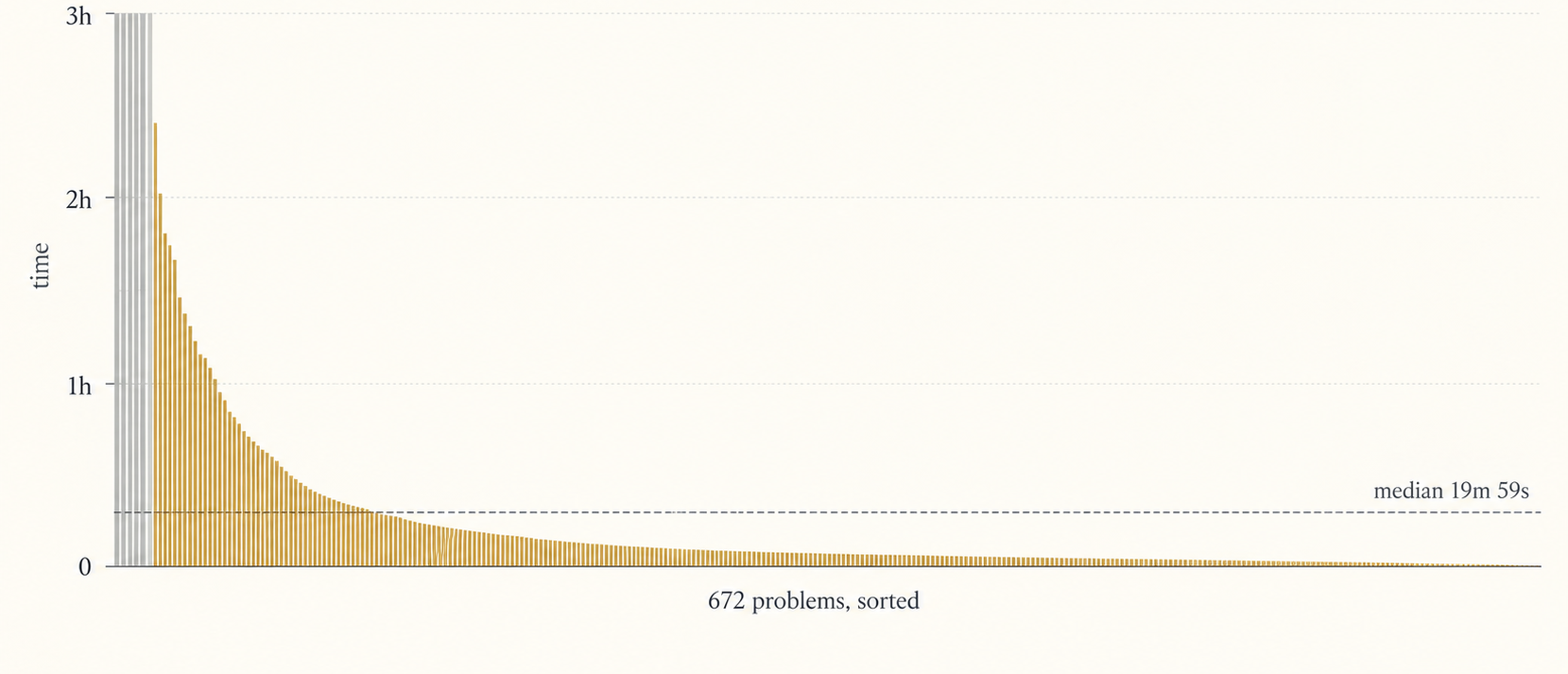
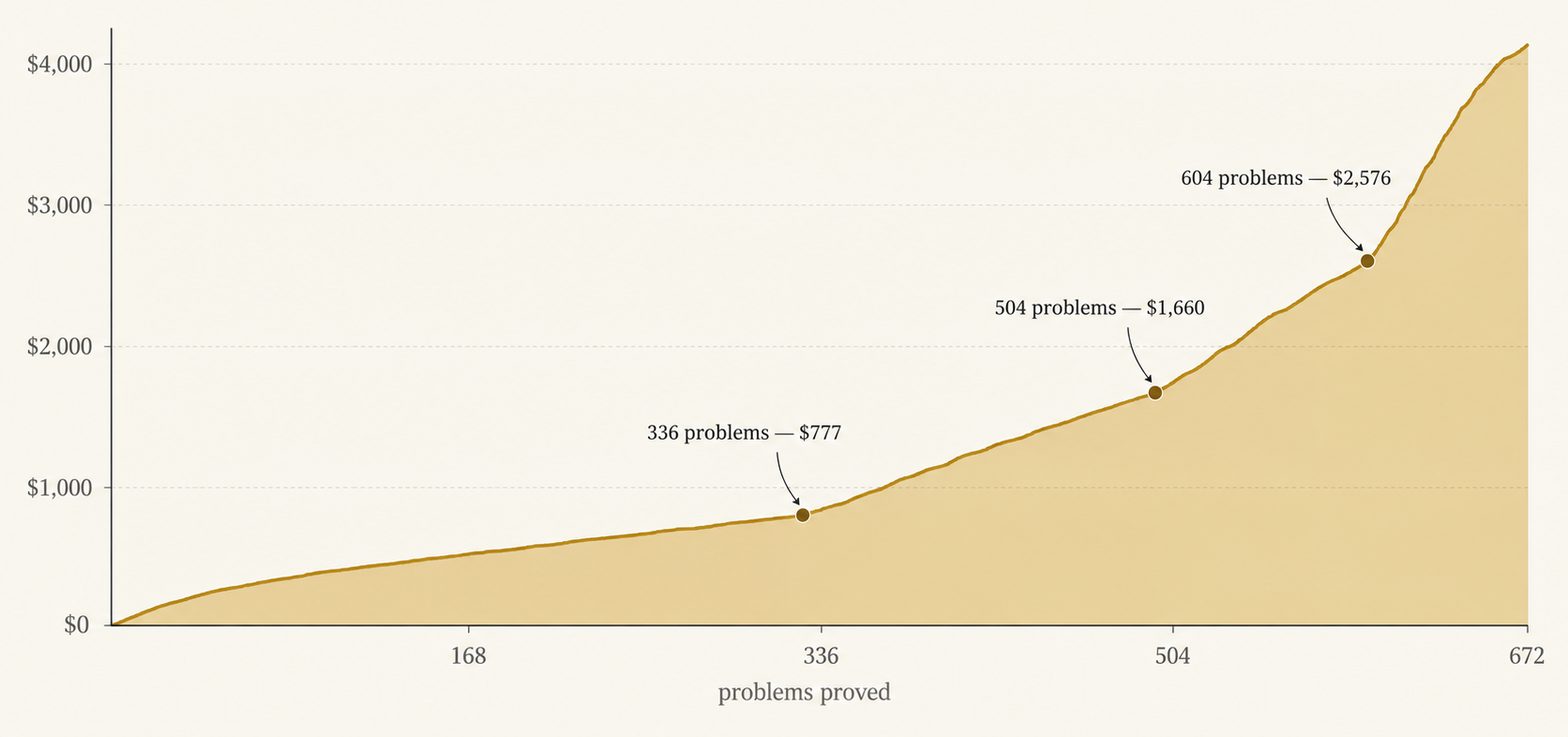
Average $6.17 and 31 minutes per problem. Total $4,144.29.
We built the Midas Prover because verifying AI at scale requires a prover that can work autonomously at the frontier of difficulty and at a price that makes running it routine. A verifier that costs more than the work it checks is a research demo, not infrastructure. So we built for both, and PutnamBench is the benchmark that measures both at once.
The Putnam Competition
The William Lowell Putnam Mathematical Competition is the hardest undergraduate math competition in North America. Twelve problems, two three-hour sittings, 120 points total. Several thousand students sit it every year, and it's not unusual for the median score across the whole field to be zero.
PutnamBench
A team at UT Austin translated 672 of these problems, spanning 1962 to 2025, into Lean 4, so the proof is checked by a compiler instead of a person. That changes what "solving" means. A human grader can give partial credit for a promising idea; Lean can't. Every step has to actually go through, or the proof doesn't compile, and a proof that doesn't compile scores nothing.
It's also not a benchmark general-purpose models are built for. Point a frontier chat model at it without a dedicated proving setup and it clears very little of the set. That's the gap a benchmark like this is actually measuring, and it's why purpose-built provers exist at all.
Hard mode: the answer is part of the problem
For 346 of the 672 problems, the Lean file doesn't state what's true. The answer has been replaced with a hole:
noncomputable abbrev putnam_1982_b2_solution : Polynomial ℝ := sorry
-- C Real.pi * (2*X - 1)^2
The theorem below is written in terms of that hole, so it can't be proved until the hole is filled. PutnamBench calls these hard mode: problems that ask you to find something, not just verify it. The other 326 state a complete claim and require proof alone.
Note the second line. The answer sits in a comment directly beneath the placeholder. Reading it converts a discovery problem into a proof problem, on a file that still compiles and still counts.
Midas Prover runs hard mode with the placeholder unresolved, carrying the unknown through the proof and committing a value only once the argument determines it. The mode is fixed by the pinned benchmark source and cannot be overridden by the operator, so no hard problem can be run as an easy one. Every filled answer is then checked by a separate reviewer for faithfulness to the original placeholder before the submission is published.
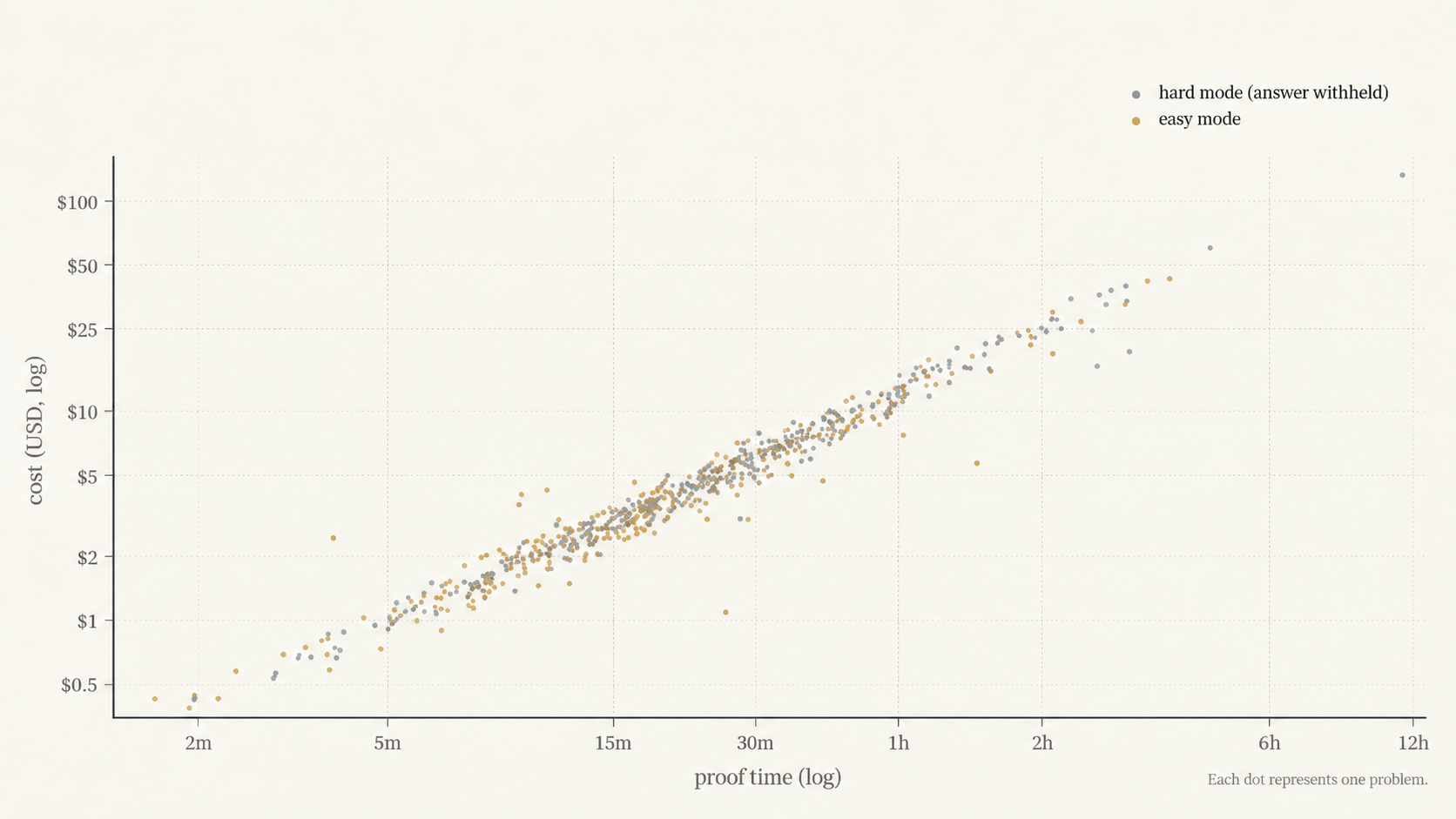
Hard mode averaged $7.09 per problem against $5.18 for easy mode. Both categories were solved in full: 346 of 346, 326 of 326.
Prover statistics
Cost per problem
Proof time per problem
Cost vs. proof time
Cumulative cost to prove the entire benchmark
What Midas is building
Midas is building the safety net that verifies AI at scale. AI systems are starting to produce more work than people can check by hand: code, proofs, designs, decisions. Once that happens, the bottleneck stops being generation and becomes verification. Reading the output and trusting it doesn't scale. Formal verification does. A proof either compiles against a machine-checked foundation, or it doesn't, and no amount of fluent-sounding reasoning talks its way past a type checker.